Landscape-scale restoration treats whole watersheds and ecosystems as one connected system. Learn how this approach delivers durable ecological outcomes and lasting community value.
Nature does not recognize property lines. Water moves downhill across boundaries. A minnow does not know where one landowner’s stream ends, and the next begins. For a long time, the standard way to fix a damaged stream or wetland was to work on one parcel at a time. A developer needed to offset an impact, so a single site was restored to check the box, and everyone moved on. But when you restore only one piece of a system that spans thousands of acres, the results are often fragile, and the ecological gains can wash away the first time conditions shift.
Landscape-scale restoration takes a wider view. Instead of treating a site as an island, it treats the whole watershed or ecosystem as one connected system, and it plans the work accordingly. The unit of thinking is not the parcel. It is the network of streams, floodplains, forests, and habitats that function together.
Starting with how the whole system works
The approach begins with a simple question: how does this ecosystem function, and where is that function broken? A stream that runs too fast picks up sediment and pollutants and carries them far downstream. A wetland that has been drained loses its ability to store floodwater and recharge groundwater. These problems rarely stay put. They ripple through the watershed. So the design has to account for the whole chain, not just the visible symptom on one property.
This often means beginning restoration at the headwaters of a stream system. Improving conditions where the water starts allows those benefits to carry far downstream, helping stretches of the watershed that were never touched by a crew. Working across a range of landscapes, from impaired streams and floodplains to prairies, wetlands, and habitat corridors, the goal is to restore natural function while keeping projects on schedule and in compliance.
Why scale changes the outcome
Restoring at scale does more than expand the acreage. It changes what the finished project can withstand. A single restored site sitting in a degraded watershed is under constant pressure from everything happening upstream. A watershed restored as a connected whole is far more resilient. It can absorb storms, adjust to a changing climate, and keep functioning through the footprint of human activity, because the parts are working together rather than in isolation.
The Volvo project in South Carolina shows the logic in practice. Rather than relying on a single mitigation site, RES built a landscape-scale conservation strategy that restored and preserved critical resources across multiple properties. That watershed-scale approach offset the facility's environmental impacts and strengthened the state's broader conservation network at the same time. The company kept a $5 billion facility on schedule and anchored in-state, while delivering an ecological result that reached well beyond any one parcel.
A model built on staying
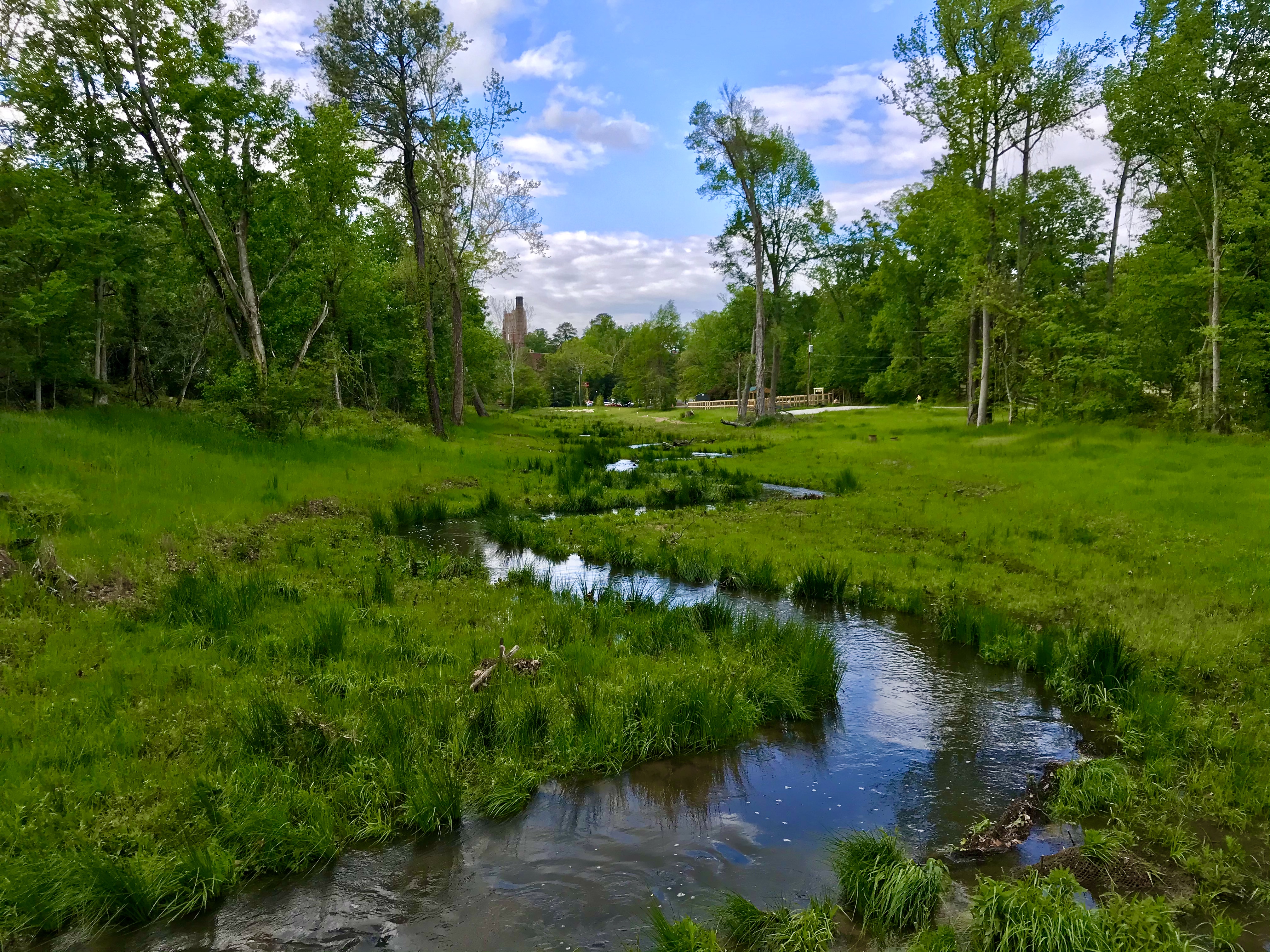
Scale also demands a longer commitment, because a watershed does not recover in a single season. This is why landscape-scale work pairs restoration with long-term monitoring and stewardship. On the Pennsylvania Turnpike's Buck Run project, three years of monitoring showed a steady stream channel and the full return of the redside dace, a sensitive native minnow whose presence signals genuine water quality and stream health. That kind of evidence only appears when someone designs the system correctly and then stays with it long enough to prove it works.
The largest expression of this idea is unfolding on the Klamath River, where more than 400 miles of historical salmon habitat have reopened across Oregon and California following the removal of four aging hydroelectric dams. It is a project measured not in acres but in watersheds, shaped by a shared vision among many signatories, including the Yurok, Karuk, Klamath, and Hoopa tribes who have stewarded the river for millennia. RES led the restoration that followed dam removal, paired with a multi-year performance commitment. Different project, different scale, same approach.
Why it matters for development
For large-scale development, this way of working turns an environmental requirement into a durable asset. A landscape-scale strategy can offset unavoidable impacts while building visible, lasting value across a whole region, which strengthens trust with regulators and local communities in a way that a single isolated site rarely can. The result is more than mitigation. It is a functioning system that manages water, supports biodiversity, and sustains itself over time, protecting both the ecosystem and the investment that depends on it.
That is the heart of restoring at scale. Treat the system as a whole, design for how it actually works, and stay with it long enough to guarantee it can stand on its own.