Mitigation credits are not a problem to solve late in the project cycle. They are a competitive advantage to secure early.
Mitigation is one of four integrated steps. Early advisory determines whether mitigation is a constraint or a non-issue. Ecological site solutions turn the on-site portion of your environmental investment into visible community benefit. Water stewardship converts the most scrutinized issue in data center development into a verified, measurable asset. Mitigation removes the permitting constraint that would otherwise stop the other three from mattering.
Sequenced together, they are the difference between a project that waits and a project that moves.
The mitigation trap that kills schedules
A developer identifies a preferred site. The site has environmental value, including jurisdictional wetlands, stream corridors, and habitat for protected species. Once environmental impacts are assessed, mitigation credits are required to offset them.
But the regional mitigation bank is depleted. Credits are not available. The developer faces a choice: find credits at premium prices, pursue a more complex and time-consuming permittee-responsible mitigation pathway, or move to a different site.
This delay occurs when mitigation is treated as an obligation to be addressed after site selection and impact assessment. At that point, options are limited, and costs are high.
For developers who plan early, that trouble is averted.
READ NEXT > Environmental due diligence for data center site selection: How early advisory prevents delays
Three mitigation pathways, but only one gives you control
Environmental mitigation is legally required when projects impact wetlands, streams, or protected species habitat. There are three primary pathways.
-
Mitigation banking involves purchasing pre-approved credits from existing banks within the watershed of impact. This is fast when credits are available and expensive when they are not.
-
In-lieu fee programs involve payment into a restoration fund that generates credits later. Availability varies by region and often cannot accommodate the impacts of large-scale projects.
-
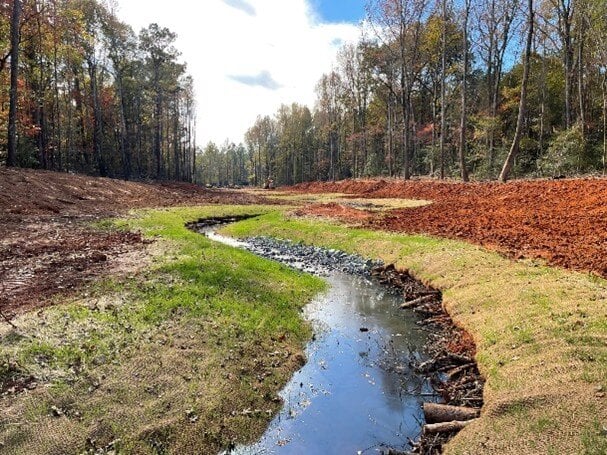
Permittee-responsible mitigation (PRM) involves designing and building a custom mitigation project specifically to address your project’s impacts. When credits do not exist in the market, PRM is often the only viable pathway.
The problem with all three is the same. When you address them reactively, after site selection and impact assessment, you have already limited your options and accepted site-specific constraints.
READ NEXT > Data center permitting delays: how nature-based solutions accelerate approvals
Flipping the script: Mitigation as your schedule advantage
When environmental due diligence happens during site selection, the equation changes. Is mitigation available? What is the lead time? Would PRM be required? Can feasible mitigation pathways be secured within your project timeline?
Sites with clear mitigation pathways and available credits become more valuable. Sites where mitigation is complex or unavailable become less competitive.
Why PRM does not mean delay
Permittee-responsible mitigation can accelerate the schedule compared with waiting for bank credit to become available.
Here is why. With PRM, mitigation design and permitting happen concurrently with your project permitting, not sequentially. Your mitigation solution is approved as part of your construction permit, not after it. You are not dependent on what exists in the regional mitigation market. You are designing a solution that fits your specific impacts and your specific timeline.
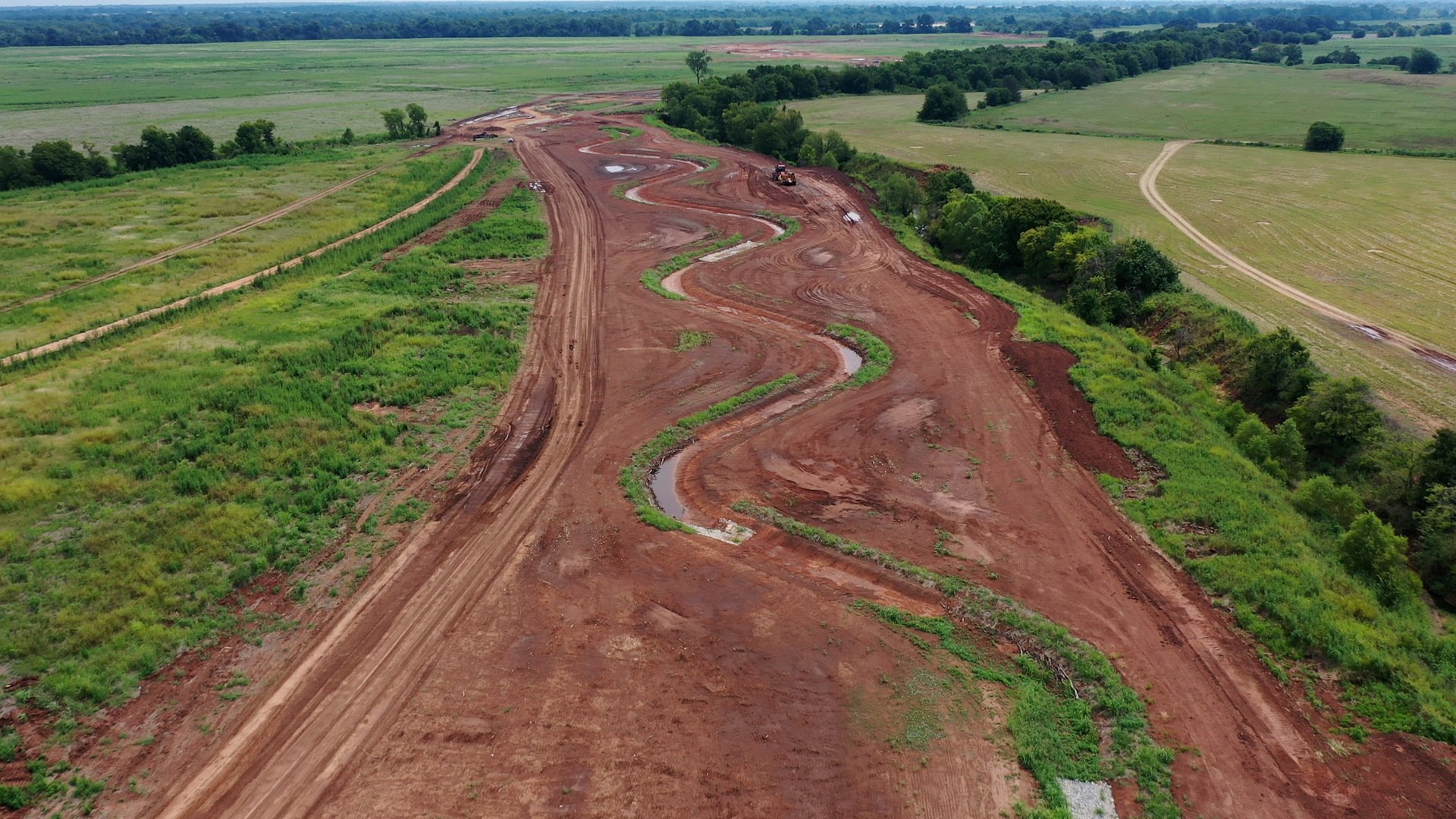
CASE EXAMPLE: The Bois d’Arc Lake project in North Texas demonstrates this at scale. The North Texas Municipal Water District needed to build a reservoir serving 13 cities. The problem was that it would permanently flood 16,500 acres of habitat in a water-stressed region. RES restored 17,000 acres of degraded working landscape to native forest, meandered 70 miles of channelized streams back to natural paths, and planted 6 million trees in floodplain corridors to slow water and push it into aquifer recharge. This is the largest permittee-responsible mitigation project ever executed in the U.S. The regulatory pathway accelerated through proactive ecological planning, and it is a replicable model for data centers in water-stressed Texas markets.
READ NEXT > Data center water usage: how verified water stewardship accelerates community approvals
Dual-purpose mitigation: Compliance and community benefit
The same restoration project that satisfies regulatory mitigation can simultaneously deliver volumetric water benefits or ecological site solutions (ESS).
A stream restoration project might satisfy your mitigation requirement while also providing water quality uplift that communities value. A wetland restoration project might offset your impacts while also creating accessible trails and recreational space. One ecological investment, two measurable outcomes: Regulatory performance and community support.
This dual-purpose approach is more efficient and more persuasive to regulators and communities alike.
READ NEXT > Ecological site solutions for data centers: How site design builds community support
Getting mitigation right from the start
Effective mitigation planning begins at site selection and includes:
-
Early species and wetlands assessment identifying potential impacts and mitigation requirements before you are committed to the site.
-
Regional mitigation inventory analysis confirming credit availability and lead times in the applicable service area.
-
Mitigation pathway evaluation determining which pathway, bank credits, in-lieu fee, or PRM, is most feasible and cost-effective for your specific impacts.
-
Cost modeling to understand fixed costs and timeline implications before finalizing site selection.
Teams that work through this analysis early are positioned to select sites with clear regulatory pathways and lock in mitigation strategy before permitting complications emerge.
Environmental permitting is not optional. How you approach it absolutely is.
Ready to evaluate mitigation for your site? Contact one of our site specialists for a free site assessment.
FAQs
What are the three ways to secure mitigation credits?
Mitigation banking, in-lieu fee programs, and permittee-responsible mitigation (PRM). Banking is fastest when credits exist in the watershed. In-lieu fee availability varies and rarely covers large impacts. PRM is often the only viable pathway when the market is depleted.
Does permittee-responsible mitigation slow a project down?
Not necessarily. With PRM, mitigation design and permitting run concurrently with project permitting rather than after it, and the mitigation is approved as part of the construction permit. That can be faster than waiting for bank credits to become available.
When should mitigation planning start?
At site selection. Credit availability and lead time are site selection criteria, not post-acquisition problems. Sites with clear mitigation pathways are simply worth more.