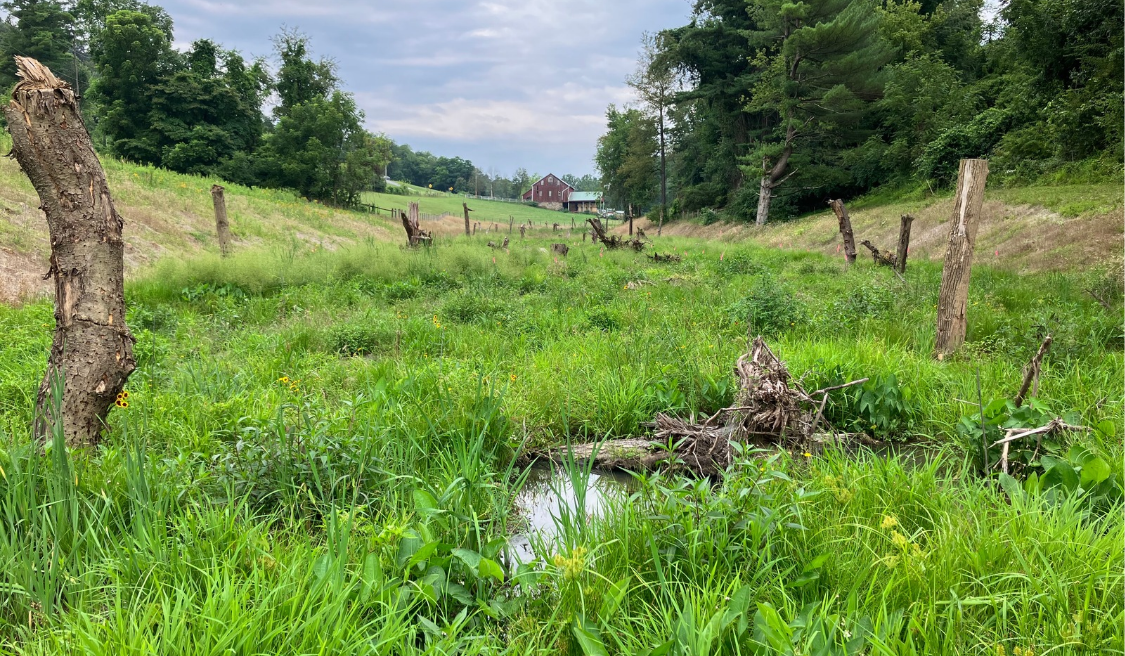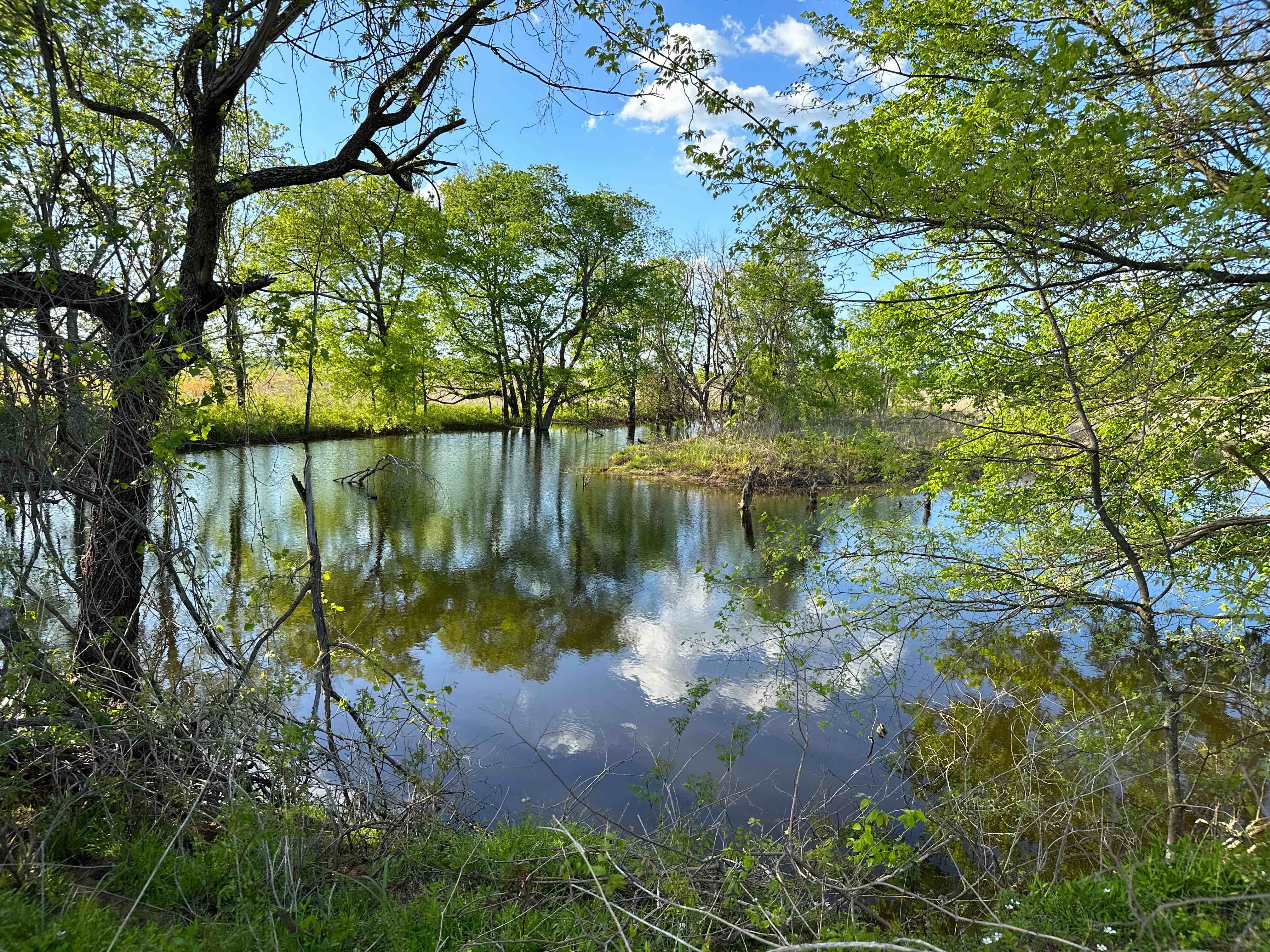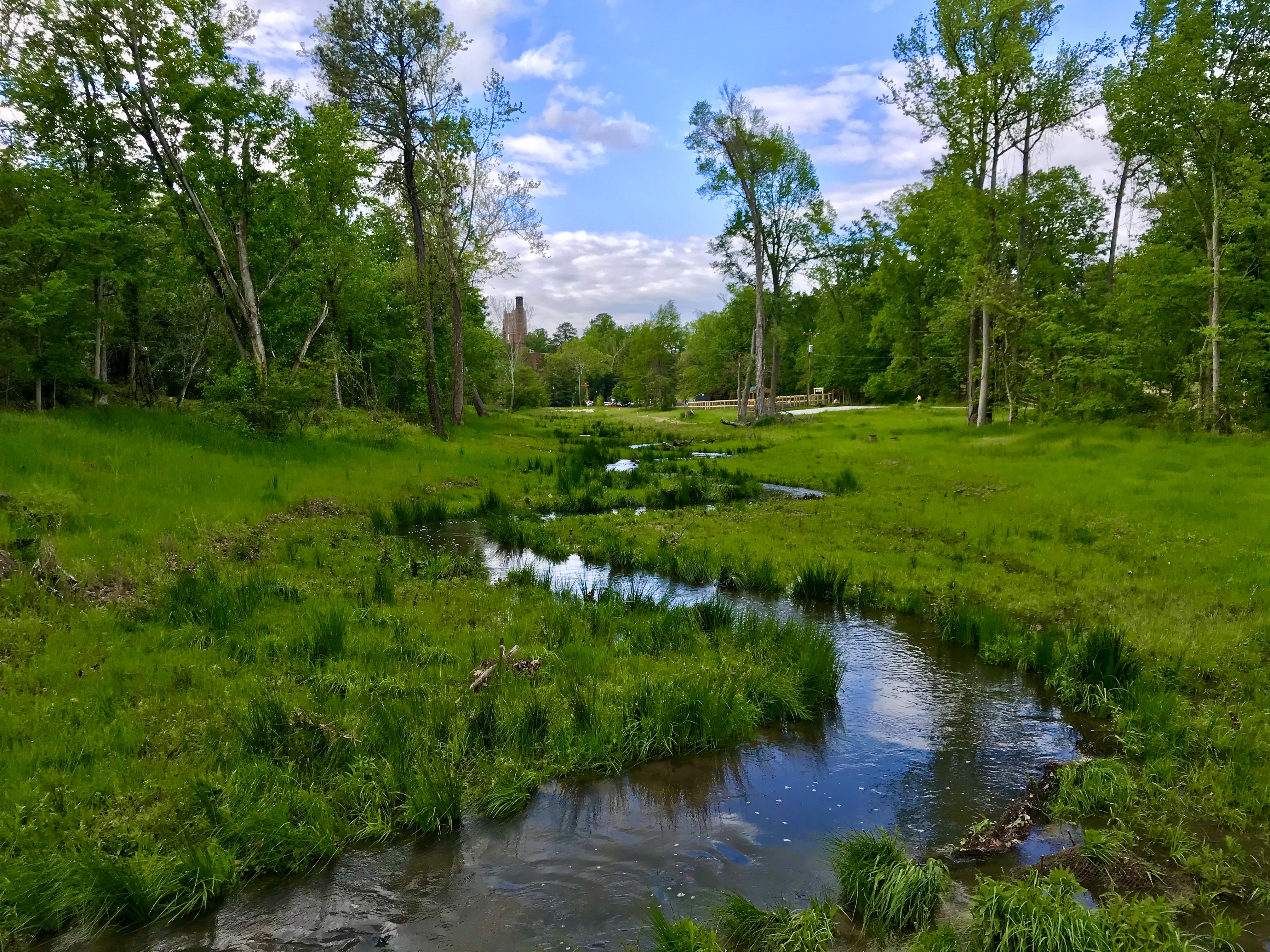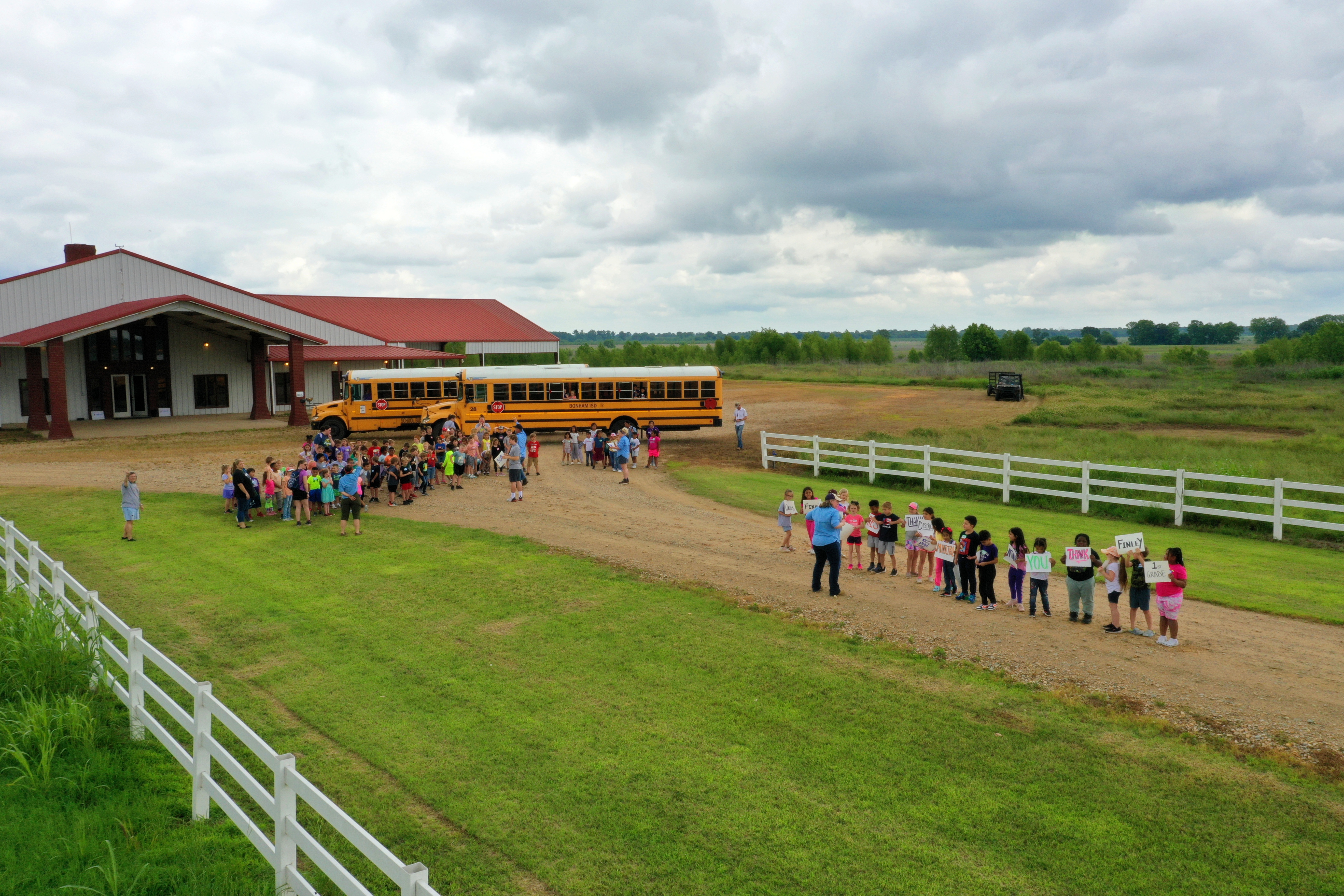

The sustainability conversation in life sciences is usually framed inside the walls of a facility: how it's built, how much energy it uses, how it operates. Those are big levers. But some of the biggest risks to a new campus, to its schedule, its capital, and its standing in the community, sit outside the walls, in the land around the facility and the watershed it draws from.
Planning for those risks early, alongside the building itself, allows ecological work to protect the schedule and capital rather than compete with them.
Life sciences is in a domestic construction supercycle
Reshoring, supply-chain resilience, and pricing pressure have produced the largest U.S. life sciences buildout in decades. By industry tallies, roughly 14 companies have pledged more than $480 billion in U.S. manufacturing investment since early 2025. That spending spans about 22 announced megasites, some of which will take nearly a decade to fully build out.
Much of it is happening on greenfield land. Land, water, and permitting commitments are being made before demand or approvals are confirmed. On a project that will take five to ten years, the decisions made during site selection and concept design set the environmental risk profile for everything that follows.
Why look outside the four walls?
Five considerations come up on nearly every new site.
-
Capital efficiency. Sustainability often competes for the same capital as everything else on the project, so it must be justified in both dollars and risk.
-
Schedule. Environmental issues that surface mid-build lead to delays in the building process, and on projects of this scale, those delays cost millions.
-
Water. High-purity water needs for Water for Injection (WFI) and Clean-in-Place (CIP) are running up against regional scarcity. Water-intensive industries of every kind are facing closer scrutiny of both permitting and usage, and none is immune.
-
Community. Farmland conversion, combined with new water demand, can trigger local opposition. It isn't always a regulatory issue that slows a project down.
-
Land. Large setbacks and open acreage held for future phases can be a maintenance cost or an asset for the site. More companies are looking for creative ways to use that land.
These considerations are interconnected, and a strategy that addresses only one leaves the others exposed.
What conventional site development does to land and water
The conventional pattern is familiar. Farmland becomes building footprints, roads, and parking, and much of it becomes impervious surface: hard surfaces such as roofs and pavement that keep rain from soaking into the ground.
Increasingly, that runs into state and local impervious-cover restrictions, which add time to the permitting process. Impervious surfaces also increase runoff and the sediment and nutrient loads carried downstream, a pattern known as urban stream syndrome: the consistent decline in stream health that follows development.
Small streams and wetlands are often lost in the process, even though they are hydrologically connected to downstream drinking water. Layer on drought and rising water demand, and the result is more pressure on both the permit and the community relationships where a facility operates.
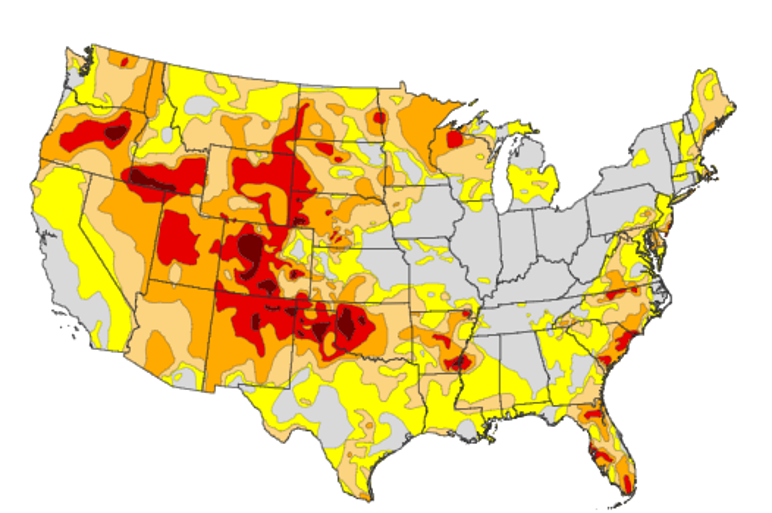
This image shows the U.S. Drought Monitor map, a weekly updated data visualization produced jointly by the National Drought Mitigation Center at the University of Nebraska-Lincoln, the United States Department of Agriculture (USDA), and the National Oceanic and Atmospheric Administration (NOAA).
What the peer-reviewed science shows
Three points are well established.
- Impervious cover degrades streams. A meta-analysis in Science of the Total Environment links land use and imperviousness to poorer stormwater quality, and related research shows real declines in algae, invertebrate, and fish diversity as impervious cover increases.
- Small waters are connected. The U.S. EPA's report Connectivity of Streams and Wetlands to Downstream Waters synthesized more than 1,200 peer-reviewed publications. It found that streams and wetlands are physically, chemically, and biologically connected to the waters downstream of them. The impacts of development are rarely just local.
- Impacts can be quantified and offset. Standardized methods now measure how water and habitat benefits improve through restoration of streams, wetlands, and floodplains. These offsets are possible at brownfield sites too, whether that's the next phase of an existing campus or the revitalization of an industrial area.
The circles of impact
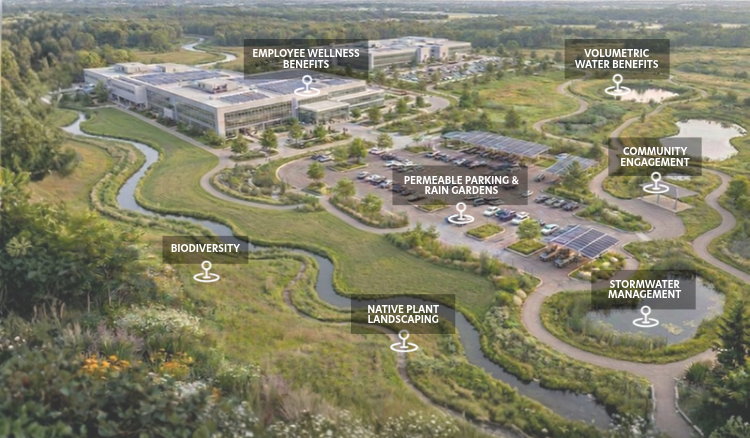
A practical way to analyze a site’s impact is as three circles, moving outward from the facility.
-
Control: the facility footprint. This is what the owner controls: everything inside the fence line, including buildings, parking, roads, and stormwater systems. This is where nature-based stormwater and native landscaping start, along with water quality.
-
Influence: open land and buffers. This is what the owner can influence: the setbacks and acreage around the site. It’s where biodiversity uplift happens and where ecological site design turns buffer land into an asset.
-
Dependence: the watershed and community. This is what the development depends on: the watershed's water resources and the people who live there. Water stewardship planning and stakeholder engagement belong here.
The key point is that the ring with the least control carries the most risk.
READ NEXT > Inside the fence line: Turning the facility footprint into performing infrastructure
Where each of the five site concerns is decided
Each of the five considerations arises at a different time in the process and within a different circle of impact.
-
Capital efficiency is shaped by design choices and timing inside the fence line, including anticipating delays such as data requests during permitting. Addressing it from the beginning reduces risk as the project expands.
-
Schedule depends on when constraints surface, at site selection or mid-build.
-
Land is decided in the open land and buffers. Opening greenfield and buffer areas for ecological solutions can address it early.
-
Water and community are determined in the outer circle at the watershed scale. Some of those concerns may surface later in the process, but ecological planning for them can start as early as any other part of the design.
The bar is already set
Many life sciences companies have already turned nature-positive goals into internal policies and site-level action plans for biodiversity and water. Published commitments include:
-
Novo Nordisk: halt nature loss across the value chain by 2033, then reach nature-positive by 2045.
-
GSK: net positive on nature by 2030, with positive biodiversity at every owned site.
-
Sanofi: biodiversity plans at priority sites now, and at all sites near sensitive areas next.
-
Novartis: help halt and reverse nature loss by 2030, with site plans where impacts are material.
These aren't just pledges. They are measurable goals that use TNFD (Taskforce on Nature-related Financial Disclosures) methods and third-party verification to show quantifiable performance.
Even so, a gap remains. Many project teams consider ecology early in the design phase, but corporate commitments often aren't yet operationalized at the facility level. Closing that gap is where the opportunity sits.
Where to start
Getting started doesn’t require a large commitment. An early desktop assessment and roadmap shows the options a site has inside and outside the fence line, across all three circles of impact, to reach sustainability goals, work with the community, and find co-benefits from the land. Done before the design is locked in, it keeps those options open instead of closing them off.
Planning a new campus or expansion? Talk with a RES specialist about a site assessment and see where your site stands before your next design milestone.
Ask RES: FAQs
How does water availability affect site selection for a pharmaceutical manufacturing facility?
Water availability can decide whether a site is viable. Pharmaceutical plants need large volumes of high-purity water for Water for Injection (WFI) and Clean-in-Place (CIP) systems, and producing that water takes more feedwater than the process uses. In water-stressed watersheds, that demand can trigger permit conditions, community opposition, or costly new supply infrastructure. Assessing watershed capacity during site selection shows the risk before the land is committed.
Why do environmental permits delay large manufacturing projects?
Delays usually occur when wetland, stream, or protected-species constraints are discovered after the design is finalized. Clean Water Act Section 404 permits require projects to avoid, minimize, and offset impacts to regulated waters. Late discoveries force redesign, re-consent, and a search for scarce mitigation credits. Running ecological surveys early keeps permitting off the critical path.
When should ecological surveys be done for a new pharmaceutical facility?
Ecological surveys should be done during site selection or early due diligence, before the design freeze. Surveys triggered after permit submittal often find constraints that force costly redesign. Running an ecology and water baseline alongside concept design lets teams design around constraints, or turn them into site assets, while options are still open.
How can a manufacturing facility contribute to corporate water or biodiversity goals?
A facility contributes only if its role is defined and measured from the start. Teams should identify which corporate commitments the site supports and decide what to quantify, such as Volumetric Water Benefits returned to the watershed or acres of habitat restored. Monitoring and third-party verification should then be built into the design so results can be reported credibly.
Can nature-based solutions work on brownfield or expansion sites?
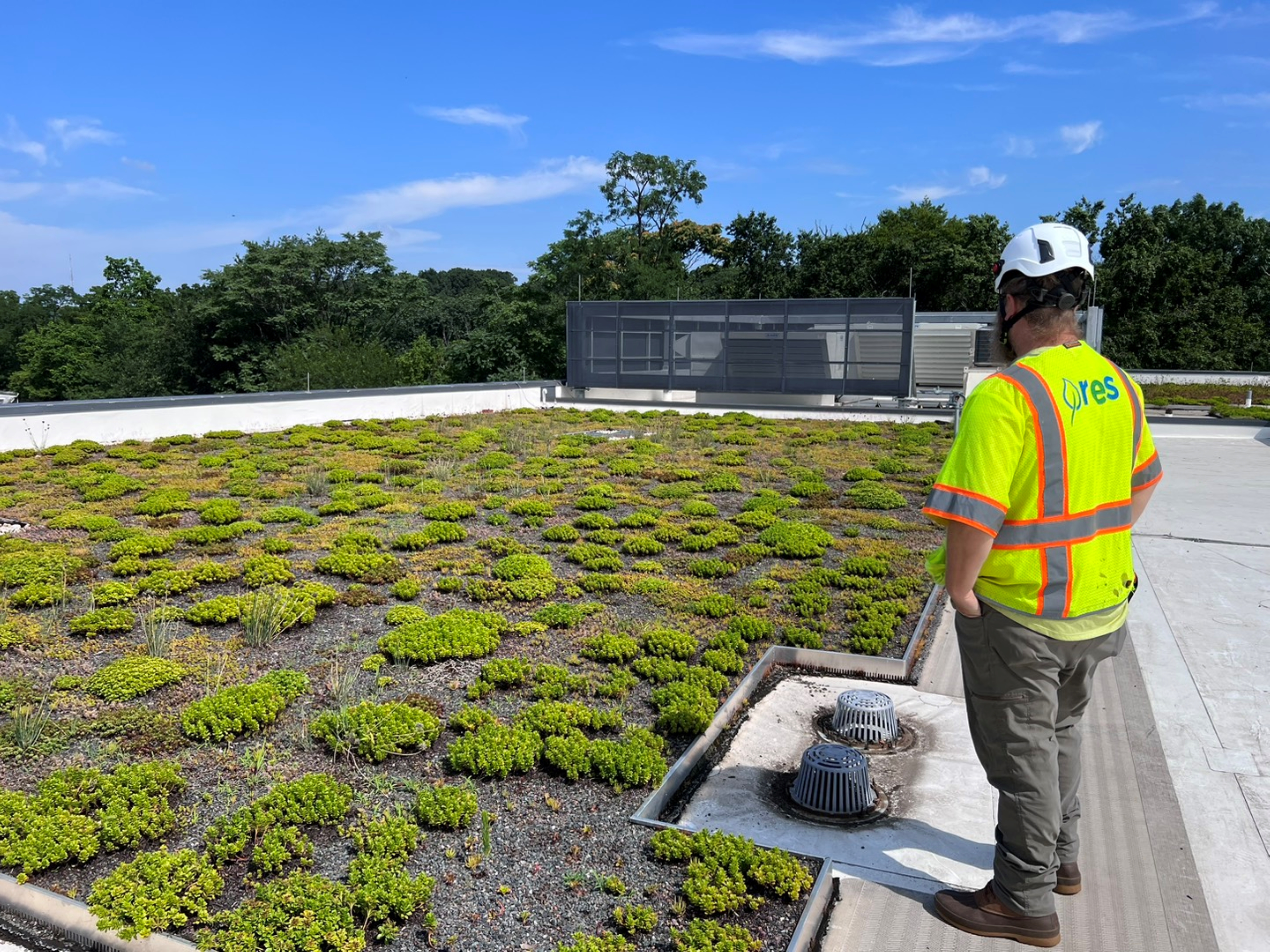
Yes. Brownfield sites may have legacy contamination that rules out infiltration, but subsurface stormwater capture, green roofs, and lined systems still deliver water performance. Buffer land and off-site restoration in the same watershed remain options for offsets and water benefits.
What does an early ecological site assessment include?
An early desktop assessment identifies a site’s ecological constraints, water risks, and mitigation needs, as well as opportunities for habitat, stormwater, and community value. It produces a roadmap that shows where ecological solutions fit inside and outside the fence line before capital decisions are locked in.