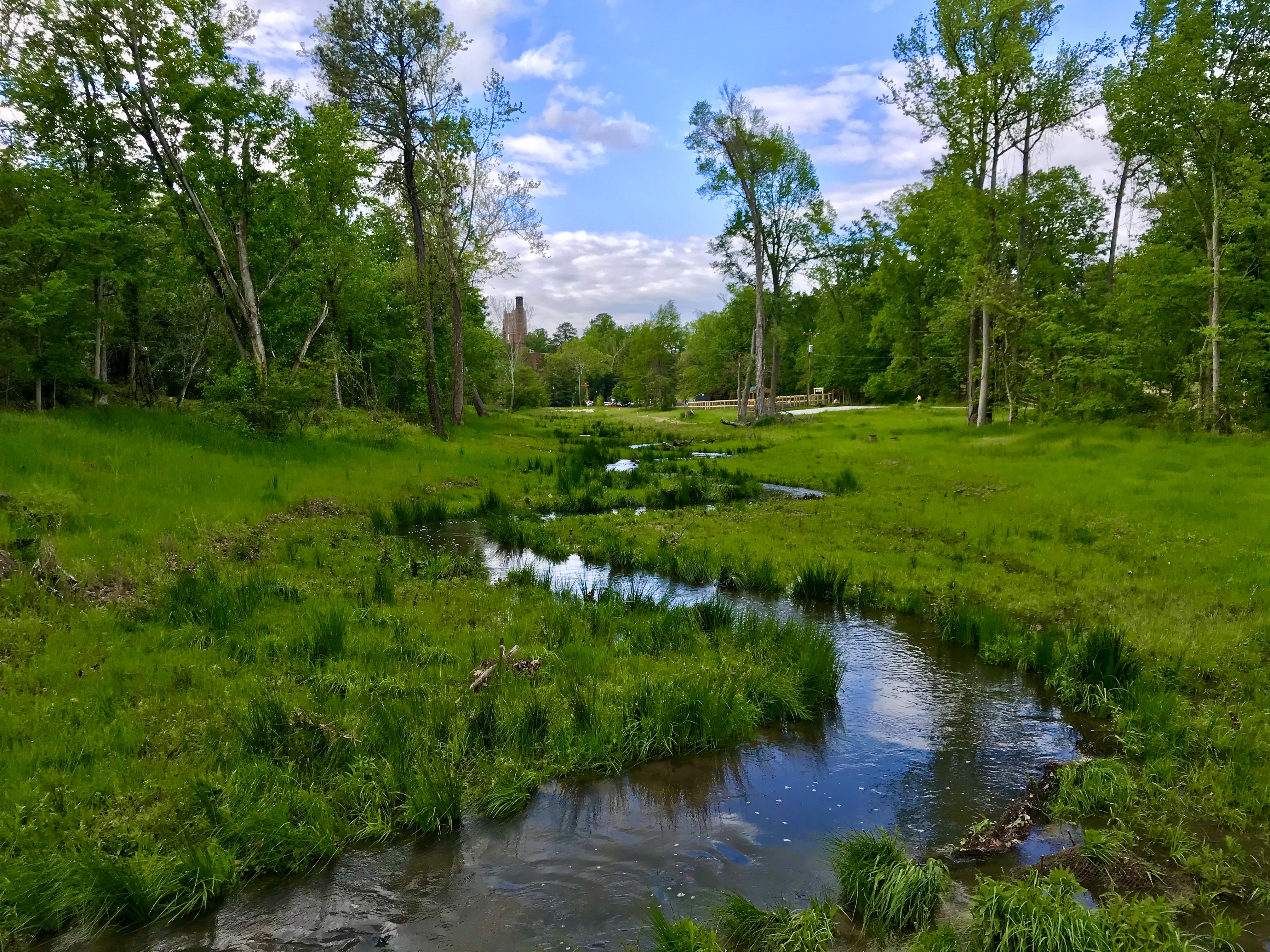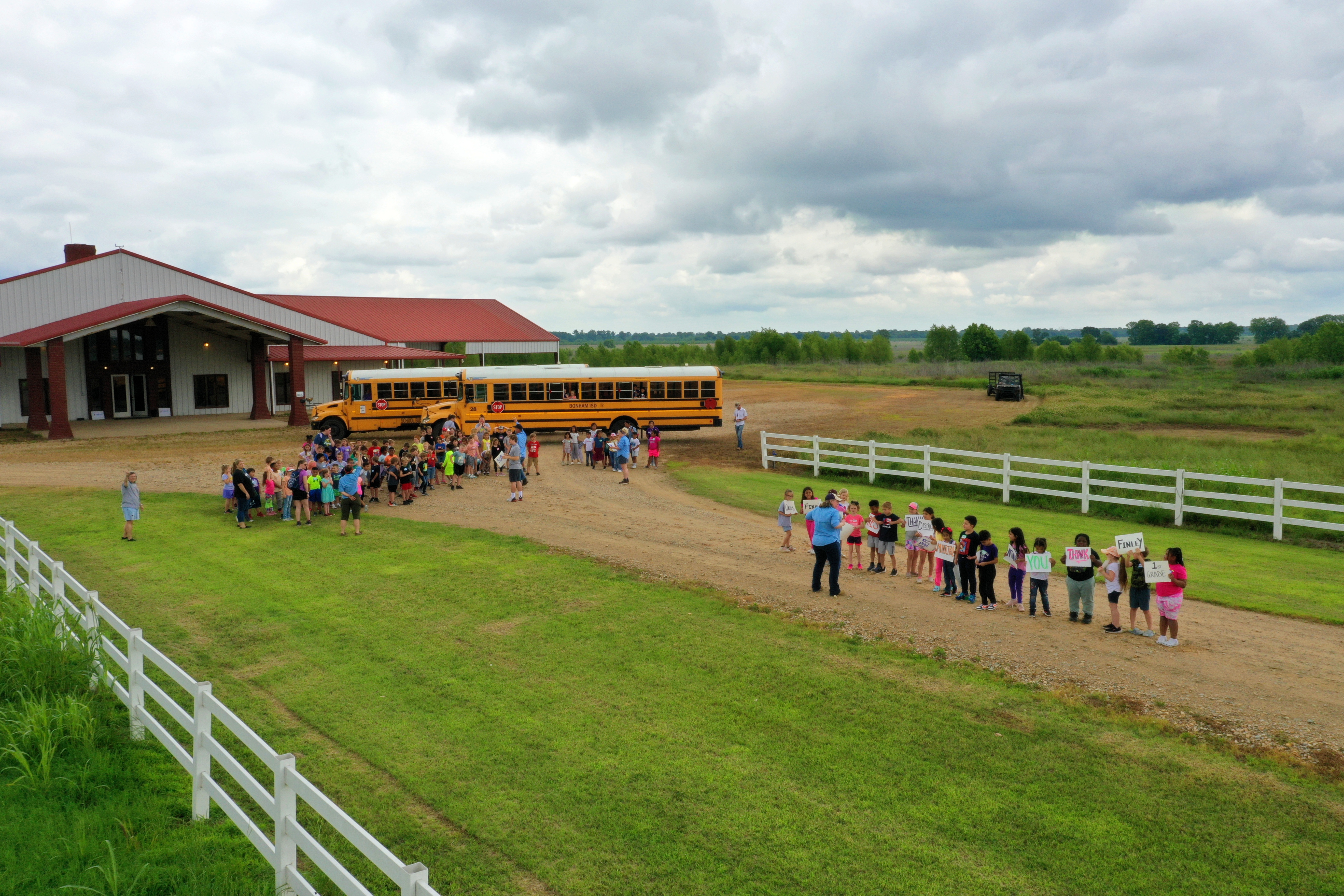

Most life sciences campuses have an inside-the-fence and an outside-the-fence. Inside the security perimeter, a different set of constraints applies, and the owner has the most control. That makes the facility footprint the best place to put an ecological mindset to work. Decisions about parking, roofs, drainage, and landscaping are capital decisions, and each one either performs for the life of the facility or becomes a recurring cost.
The footprint is the first of three circles of impact around a facility. Around it is the open land and buffers the owner influences, and beyond that is the watershed and community the facility depends on.
READ NEXT > Thinking Outside the Walls: A three-ring framework for land and water risk on life sciences campuses
Control: the facility footprint
The facility footprint generally covers the campus buildings, stormwater management facilities, parking lots, and other infrastructure required for operations. Because the owner decides everything here, this is where the earliest and most direct ecological decisions get made.
Ecology considered in parallel, not at the end
Looking at ecology early doesn't mean deviating from traditional design and project development schedules. It means reassessing and reprioritizing parts of that cycle.
It starts with early site due diligence: an environmental permitting review and a site visit to assess what is actually on the site. Standard timelines focus on identifying risks. The opportunity is to go a step further and convert those risks into opportunities. What are the environmental assets on the site? What do the risks mean for project development? And how can the project uplift those assets rather than simply work around them?
The difference shows up in the schedule. In a traditional sequence, ecological surveys are triggered after the permit application is submitted. When they find something unexpected, the project goes back through redesign and re-consent, and schedule contingency, scope, and cost all take the hit.
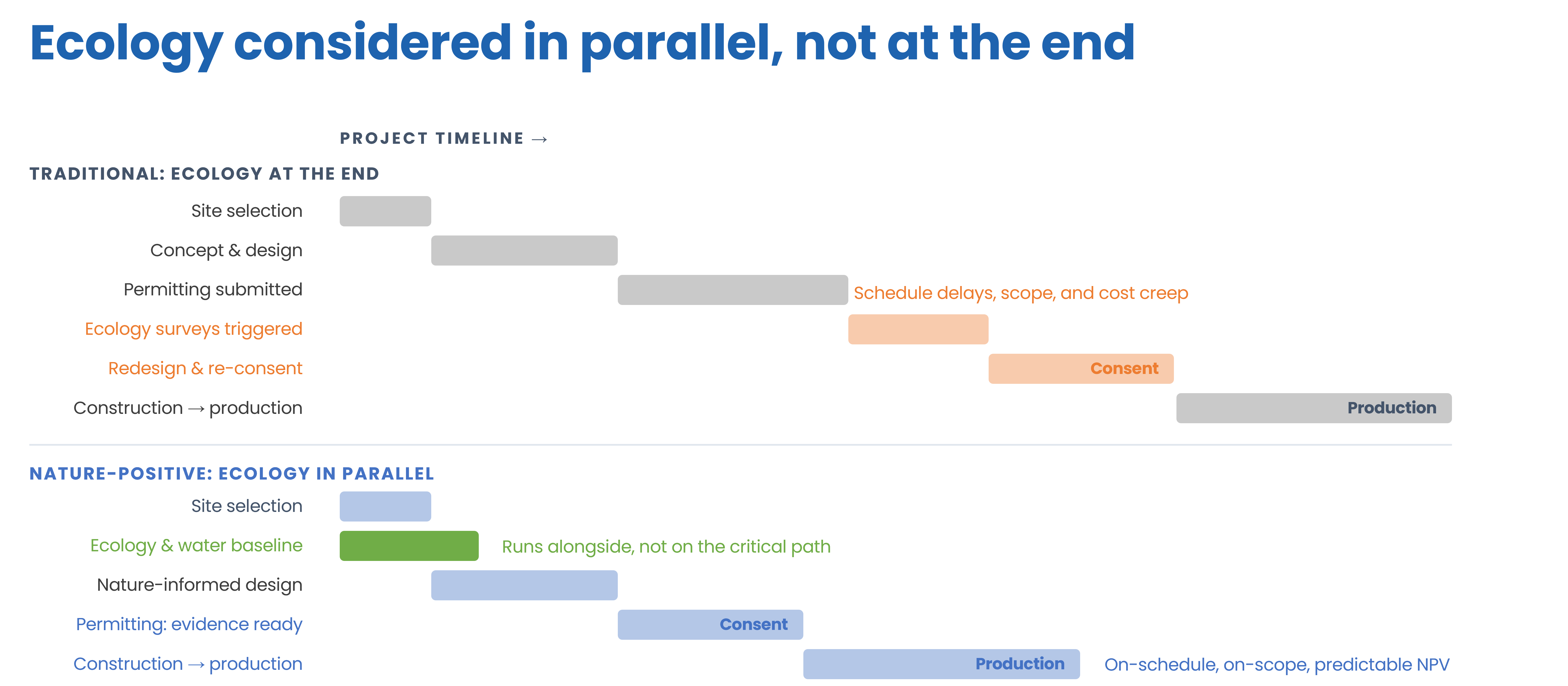
Early baseline work reduces the probability that ecological or hydrologic discoveries consume schedule contingency or require late redesign.
When ecology runs in parallel, an ecology and water baseline is built alongside site selection. Design is informed by it from the start, and permitting begins with the evidence ready. Ecological work runs alongside the critical path instead of on it.
Early assessments are increasingly common. What's less common is using them to shape design rather than filing them away in a due diligence report.
Plan mitigation with the rest of site infrastructure
Once the risks are known, the next question is what the project's impact will be: how surface waters and habitats will be affected by site development. Compensatory mitigation is the restoration, creation, or preservation of wetlands and streams to offset unavoidable impacts. When it's planned early, alongside sewer, water, power, and rail, it becomes a design parameter. When it's left until the eleventh hour, it becomes a permitting, cost, and schedule risk.
-
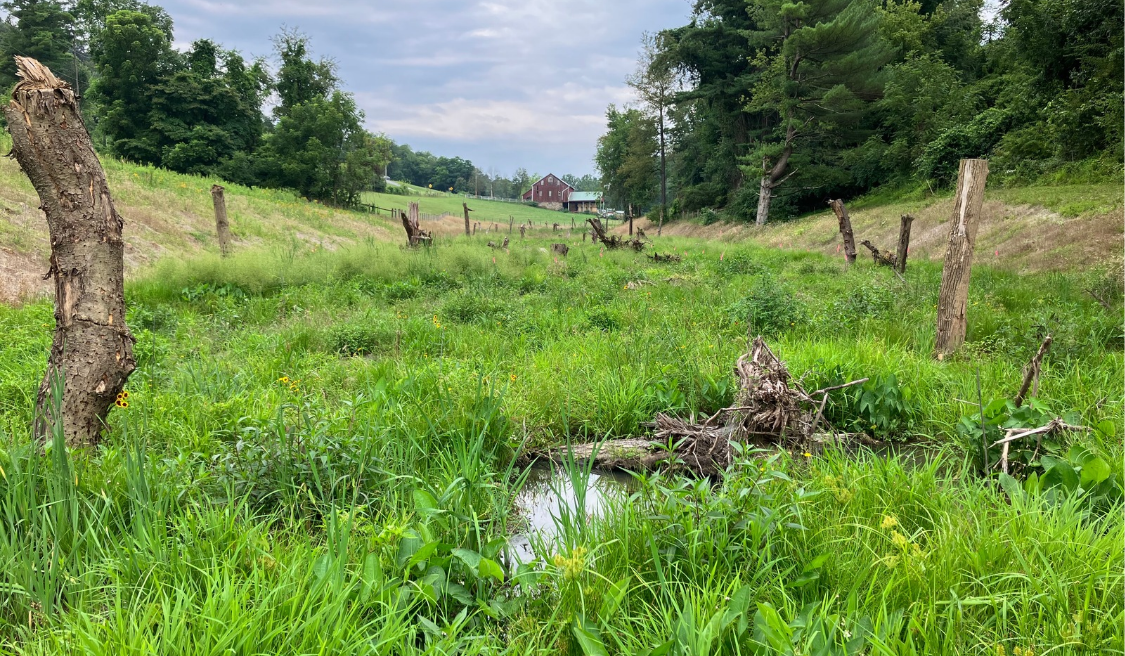
Plan early. Scope offsets with the rest of the site infrastructure, not after permitting starts. On-site solutions might mean rerouting a stream around the facility footprint, thereby avoiding impacts and keeping future development areas clear. Off-site options include mitigation banking credits or a standalone project.
-
Secure supply. Large projects deplete credit inventories. Reserving bank credits or phasing a permittee-responsible mitigation project ahead of demand protects both cost and timing.
-
Protect the schedule. Engage regulators early and hold a mitigation roadmap that supports site-readiness commitments.
Avoid, minimize, mitigate still governs the sequence. Early planning is what makes each step affordable and on time.
Identifying mitigation solutions early also builds trust with regulatory stakeholders. It shows that the project is working by openly navigating the permitting process, setting expectations early, and meeting the needs of external stakeholders. For how offsets work at watershed scale, see Watershed and community: Managing the ring you control least.
Nature-based stormwater: how it works and how well
Instead of piping runoff away as fast as possible, nature-based stormwater systems slow it, spread it, and let soil and plants do the filtering. A campus can apply them in several ways.
-
Rain gardens and bioswales work in constrained areas with extensive paving, sidewalks, or other infrastructure. Rain gardens are bioretention cells that pond runoff and allow it to infiltrate through engineered soil, with roots that trap sediment and take up nutrients. Bioswales are vegetated channels that convey and treat runoff simultaneously.
-
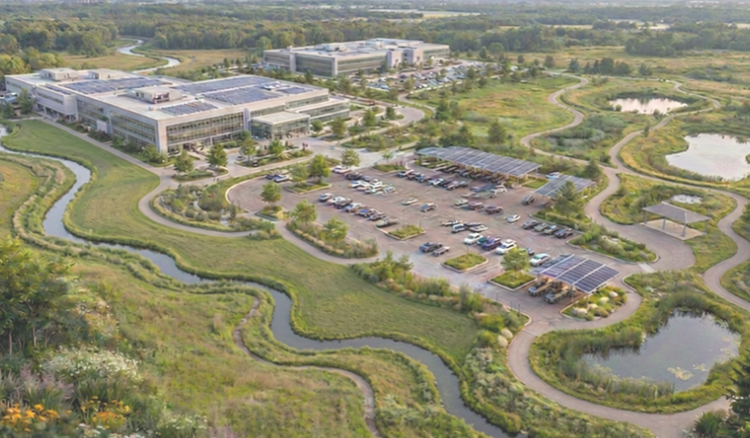
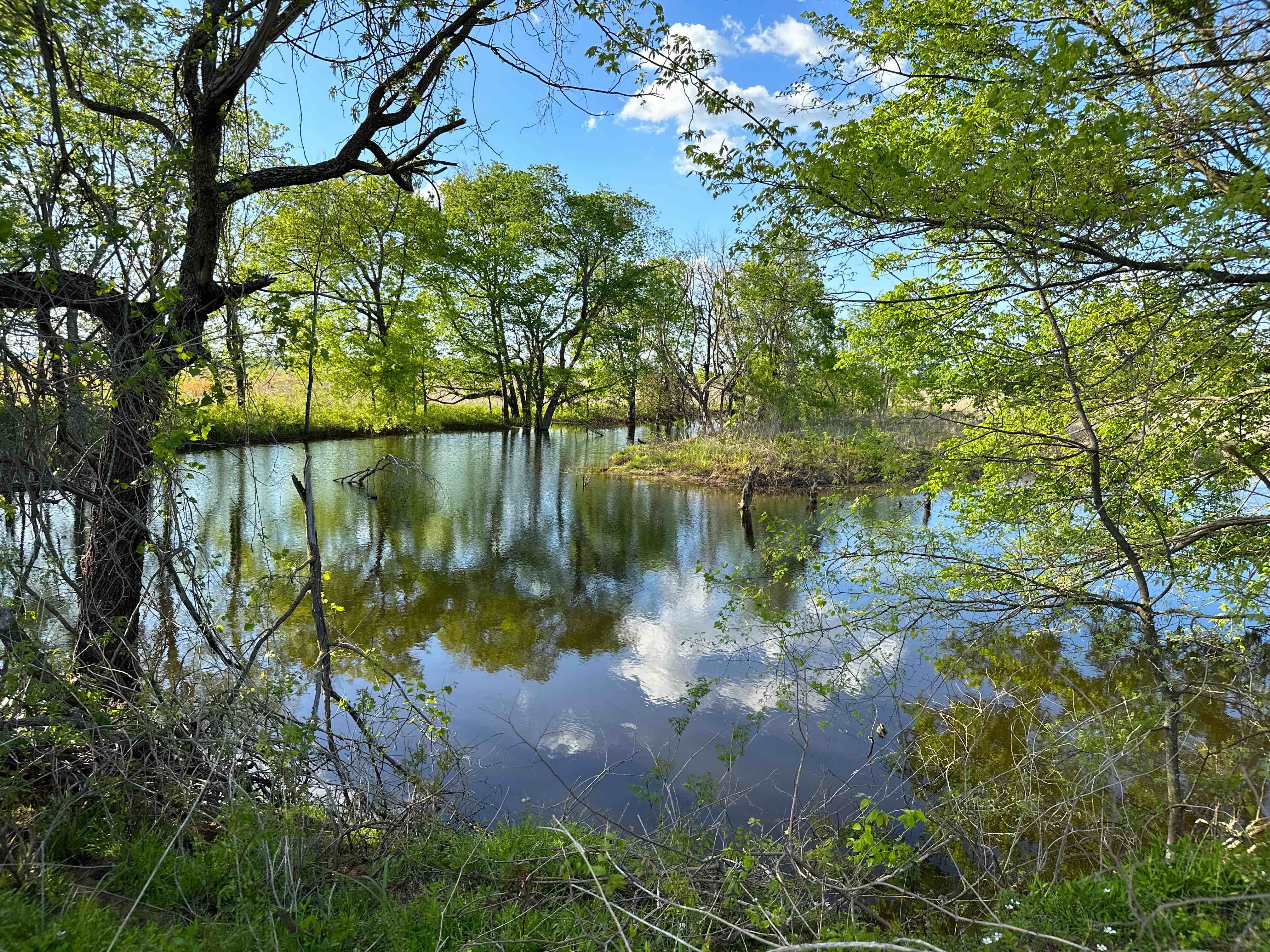
Constructed stormwater wetlands and naturalized detention use sequenced open water and vegetation to drive settling, plant uptake, and nutrient removal. They also provide habitat, making them a good fit for open or peripheral areas of a campus.
-
Buffer strips and naturalized drain swales intercept overland flow before it reaches streams and wetlands.
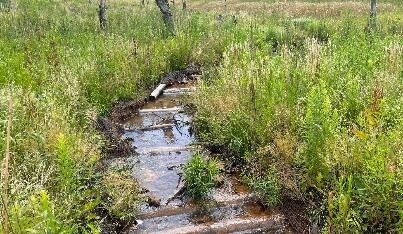
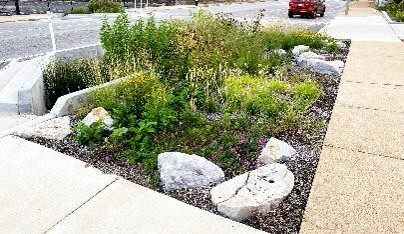
Bringing stormwater to the surface this way can reduce investment in gray infrastructure, meaning pipes, concrete structures, and underground storage. It maximizes water volume control and reduces the amount leaving the site during high-flow events. It also reduces sediment and nutrient loads that may be affecting receiving waters.
The performance is measurable. Recent global syntheses of field studies report median reductions of about 80% in total suspended solids, 76% in peak runoff volume, 55% in total phosphorus, and 49% in total nitrogen. Results vary by design, soil media, and climate.
Sources: global meta-analysis of urban stormwater bioretention field studies (Journal of Hydrology, 2025); systematic review of biofiltration pollutant removal (Water, 2025).
The green and gray infrastructure continuum
Most facilities will use a blend of gray and green infrastructure, and the right blend depends on the site.
-
Large, open greenfield campuses can rely more on naturalized approaches. Constructed wetlands, bioswales, and buffers deliver water-quality treatment and habitat on the same acreage.
-
Brownfield and redevelopment sites may have legacy contamination, which can make stormwater excavation or infiltration basins a detriment. Subsurface capture and reuse beneath parking and hardscape can recover water where surface space or soils are limited.
-
Dense urban footprints often face local requirements or incentives for green infrastructure, such as green roofs, tree trenches, permeable systems, and parkway bioswales.
Native planting supports the water neutrality target
Many companies have net-zero water or water-neutrality requirements. Landscaping is usually specified last, but it may be irrigated for the life of the facility, so the planting palette affects how much non-process water a site buys, how much stormwater it exports, and how much it puts back into the watershed.
-
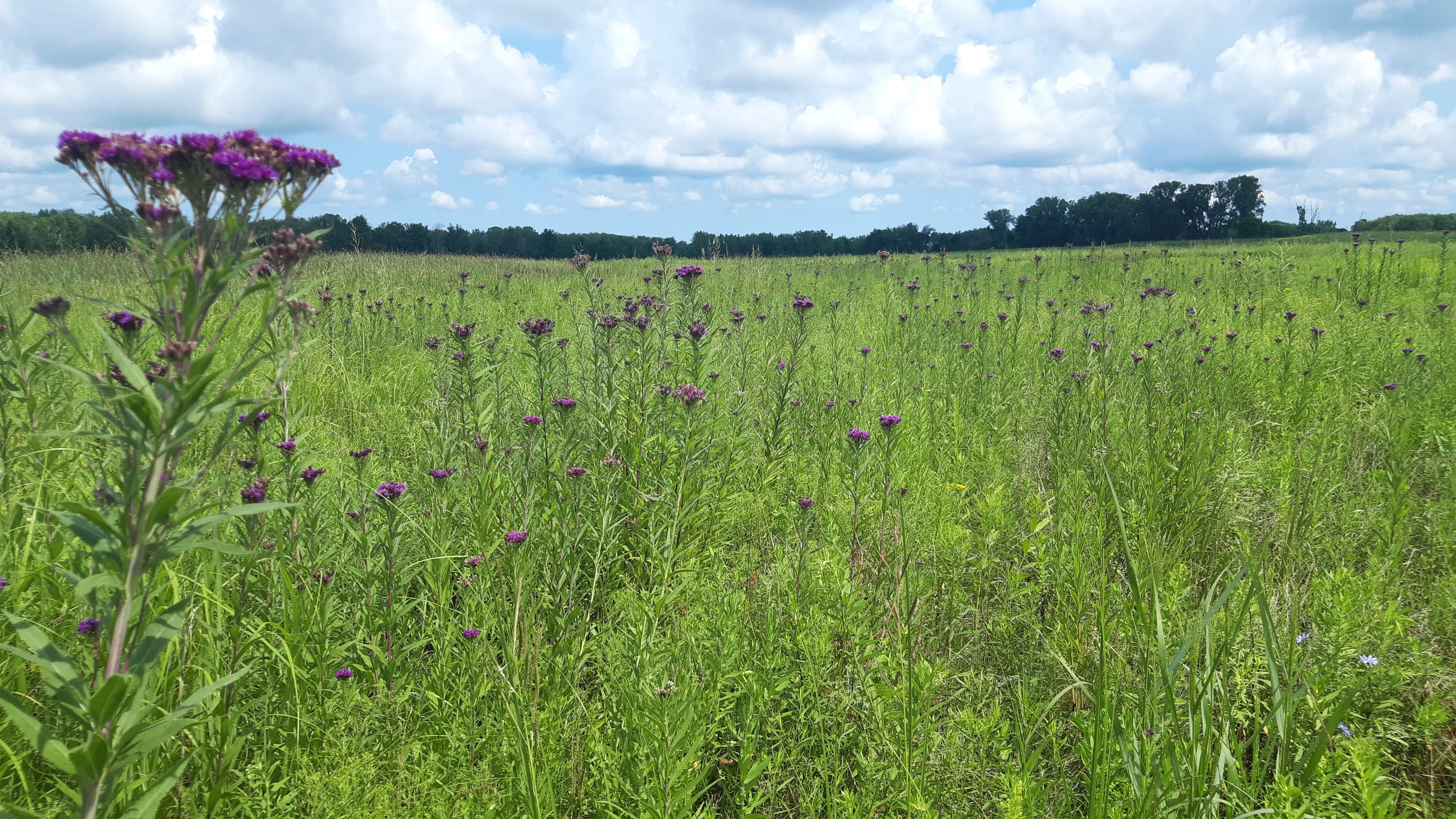
Native plants, no permanent irrigation. Native plants need supplemental irrigation during early establishment. After that, irrigation can be reduced significantly or eliminated. Locally adapted native species have evolved over millennia to thrive in these environments, so placing the right plant in the right place greatly reduces irrigation needs.
-
Planting that holds the rain. Native plants have robust root systems that create pathways through the soil and increase organic matter. Rainwater that falls on the site is absorbed into the soil, creating a giant sponge that distributes water through dry seasons.
-
Planting that reuses treated water. Where facilities separate non-contact water, which never touches product or process materials, planting areas can be a great reuse opportunity. The landscape becomes the last stage of on-site water reuse rather than a competing demand.
-
Specified in this way, the planting palette becomes water infrastructure that supports the water target.
See it in practice
At the Theodore Roosevelt Presidential Library in North Dakota, planting, seed sourcing, irrigation, and a two-acre native green roof were built into the design from the start. They were treated as site infrastructure rather than finish items.
READ NEXT > Explore the Theodore Roosevelt Presidential Library StoryMap

Matching solutions to the facility footprint
|
Solution |
Where it applies |
Principal benefit |
Key facility constraints |
|
Bioretention and bioswales |
Parking, roads, perimeter drainage |
Cuts runoff volume and pollutant load |
Pretreatment, soils, maintenance access |
|
Permeable paving, tree trenches |
Dense footprints and service areas |
Infiltration where space is scarce |
Load bearing, clogging, winter salt |
|
Green roofs |
Offices and ancillary buildings |
Runoff reduction, thermal benefit |
Structural load, waterproofing, access |
|
Rainwater capture and reuse |
Brownfield and constrained sites |
Non-process supply, less runoff |
Storage volume, treatment, cross-connection |
|
Native planting and meadow |
Setbacks, buffers, medians |
Habitat, infiltration, no permanent irrigation |
Establishment period, fire, sightlines |
|
Vegetated and riparian buffers |
Margins along streams and wetlands |
Intercepts flow before it reaches water |
Buffer width, land take, long-term upkeep |
Designing a new campus or expansion? Talk with a RES specialist about building nature-based stormwater, native planting, and mitigation planning into your site design while the layout is still flexible.
Ask RES: FAQs
How can nature-based stormwater design reduce infrastructure costs on a pharmaceutical campus?
Nature-based stormwater design reduces the amount of pipe, structures, and underground storage a campus needs. Bioswales, rain gardens, naturalized detention, and vegetated buffers manage surface runoff, control runoff volume, and treat pollutants. On greenfield campuses with open space, these systems can replace a significant share of conventional gray infrastructure at lower lifecycle cost.
Can native landscaping help a manufacturing facility meet water neutrality goals?
Yes. Once established, regionally native plants require little or no irrigation, freeing water that would otherwise compete with process demand. Their deep root systems also help the soil absorb and store rainfall, and planted areas can receive treated non-contact water as part of on-site reuse.
Can a stream on a development site be relocated to avoid permitting impacts?
In some cases, yes. Early site planning can route a stream corridor around the development footprint to avoid or minimize impacts on regulated waters. That work requires regulatory review and should be evaluated during due diligence, while the site layout is still flexible.
When should mitigation planning start on a large industrial project?
Mitigation planning should start at due diligence, alongside planning for sewer, water, power, and access. Early planning shows whether on-site avoidance is possible, whether bank credits are available in the watershed, and whether a standalone mitigation project is needed. It also builds trust with regulators before the permit application is submitted.
Will native landscaping conflict with facility security or sightline requirements?
Not if it is designed with those requirements in mind. Plant selection, mowing strategy, and the placement of plantings can preserve sightlines, access, and perimeter controls.